Stay on the ground.
Avoid unstable trees, downed power lines, damaged ceilings, and exposed electrical systems. Do not climb onto the roof or attempt a tarp installation yourself. Follow local emergency guidance and return only when it is safe.
AFTER THE WEATHER PASSES
Start with safety, then documentation, then a clear assessment. Visible damage and hidden moisture can require different responses, and each property needs its own plan.
Request an estimate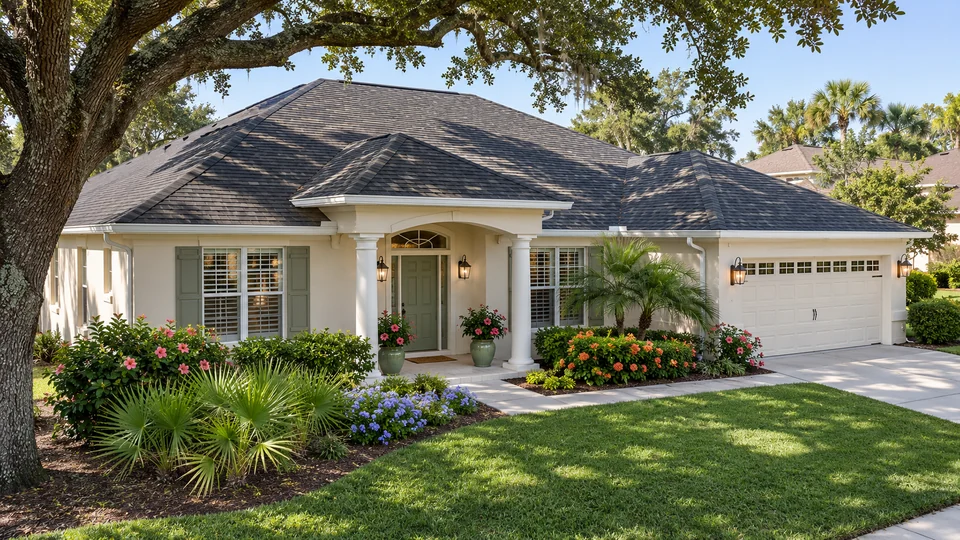 AI-GENERATED ARCHITECTURAL STUDY
Avoid unstable trees, downed power lines, damaged ceilings, and exposed electrical systems. Do not climb onto the roof or attempt a tarp installation yourself. Follow local emergency guidance and return only when it is safe.
Take dated photographs from safe locations, note indoor water entry, and retain repair receipts. A qualified contractor can document roofing conditions and a proposed scope. Insurance coverage and claim decisions belong to the insurer under the policy.
Temporary protection may reduce further exposure when safe access and weather allow. It is not a permanent repair. The final scope should follow assessment of covering, underlayment, flashing, and underlying damage.
FURTHER READING
General guidance only. Verify the applicable requirements for your property and selected products.
Florida Division of Emergency Management — Planning for your home ↗U.S. Department of Energy — Consumer guide to cool roofs ↗THE NEXT CHAPTER STARTS ABOVE
Explore the working demo inquiry.
No obligation. No real service dispatch.